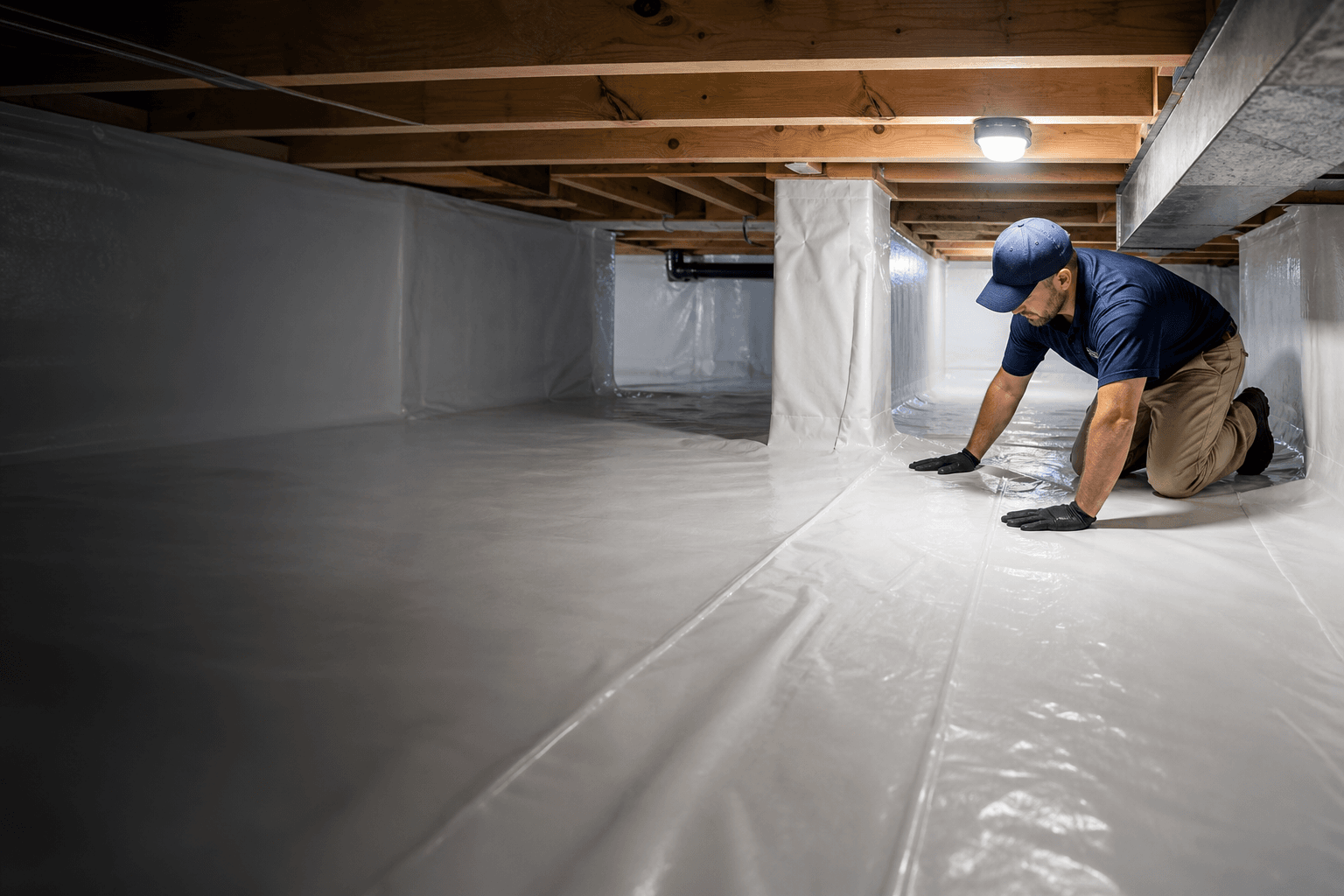
People usually call us about a crawl space because of a smell, cold floors, or mold someone spotted. What surprises them is how much sealing it changes two things they care about every day: the air in their home and their energy bills. Here's why a project under the floor reaches all the way up into your living space.
You're breathing crawl space air
It sounds strange, but a good share of the air in your home started in the crawl space. Warm air rises and escapes through the upper floors, and that pulls air up from below to replace it, the stack effect. If the crawl space is damp and moldy, those spores, that musty smell, and the allergens ride that current up into the rooms you live in.
Seal and dry the crawl space and you cut that off. The air being drawn up is now dry and clean instead of damp and musty. Plenty of people tell us the house just smells better and they're sneezing less, especially in homes on big wooded lots like a lot of Hammonds Plains properties, where the ground stays damp.
Dry air is cheaper to heat
Damp air takes more energy to heat than dry air, so a humid crawl space quietly raises your heating costs. On top of that, an open, uninsulated crawl space leaks heat through the floor and the foundation all winter.
Where the savings come from
- Sealing stops humid air you'd otherwise pay to heat and dehumidify
- Insulating the walls and rim joists keeps heat in the house instead of the ground
- Warmer floors mean you're comfortable at a lower thermostat setting
- A dehumidifier in a sealed space uses far less energy than fighting open, humid air
One project, several payoffs
That's what makes encapsulation worth it for most Halifax-area homes with crawl spaces. You're not just preventing mold and rot, you're getting cleaner air, warmer floors, and a lower heating bill out of the same job. Book a free assessment and we'll tell you what your crawl space needs and what it'll do for the rest of the house.